Starting an intravenous line is one of those skills that looks simple and is not. Cannula selection, vein assessment, sterile setup, pump programming, and recognizing a complication early all take supervised practice to learn well.
IV administration training in Ontario is a continuing education program for regulated healthcare professionals, most often nurses, who want documented, hands-on practice with intravenous therapy. The training builds skill and evidence of competence. It does not by itself authorize you to perform IV therapy: your regulatory college and your employer decide that.
Here is what a good program covers, who can enroll, and how to think about the certificate before you register.
Key takeaway
IV training documents hands-on competence, but authorization to perform IV therapy comes from your regulatory college and employer, never from the certificate alone.
What IV administration training covers
The IV Administration Certificate at Springfield College focuses on IV fluid administration and therapy management in Canadian settings such as hospitals, nursing homes, and acute and chronic care environments. Lessons are case-based, and the practical assessments are interactive rather than written exams alone.
A typical curriculum includes:
- Intravenous systems, IV therapy, and venipuncture procedure
- Equipment selection, including IV cannulas, start packs, needleless connectors, extension sets, and securement dressings
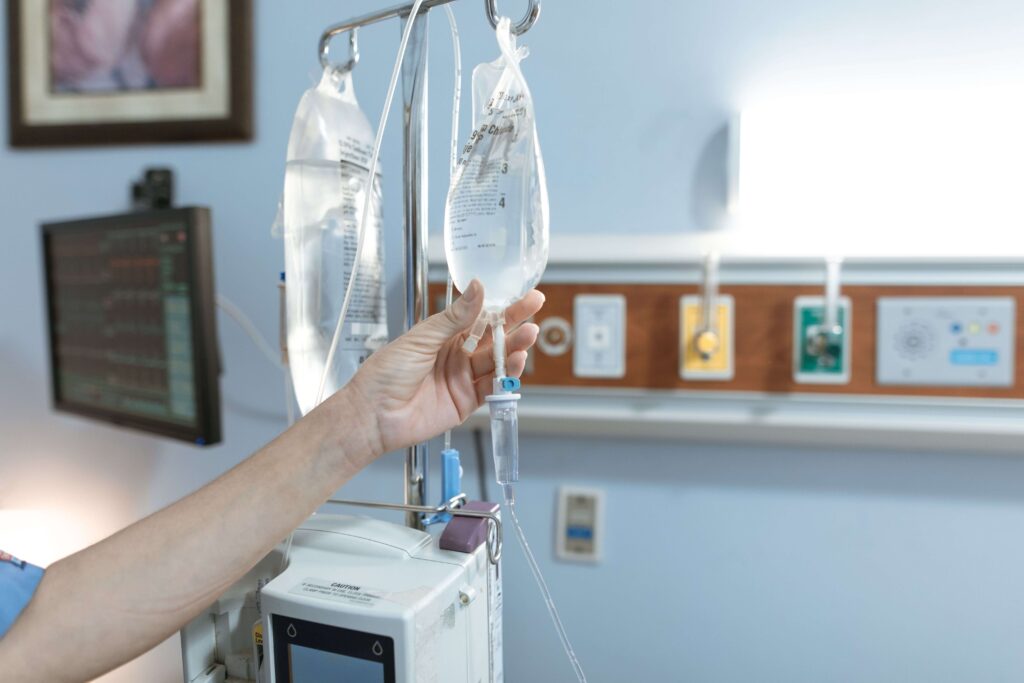
- Infusion equipment such as IV tubing, electronic pumps, and flow-control devices
- Venipuncture practice on a training arm, including securing and dressing the site
- Preventing, detecting, and minimizing complications
- Documenting IV therapy in the patient record
- Discontinuing an IV safely
That last group of items matters as much as the insertion itself. Employers who ask about IV training are usually asking whether you can manage the therapy start to finish.
Who can take an IV administration certificate
The program is designed for professionals whose scope of practice may include intravenous therapy. That group usually includes registered nurses, registered practical nurses, and paramedics, as well as internationally educated nurses who performed IV therapy abroad and want training that reflects Canadian equipment and documentation practice.
If you work in an unregulated support role, IV insertion falls outside what an employer can delegate to you, and the course presumes a clinical background. Check with your employer before enrolling so the training matches duties you can actually take on.
Program options: standard and vitamin therapy
Two versions are offered. The Certificate of I.V. Administration (Advanced Program) covers fluid administration and therapy management. The Certificate of I.V. Administration with Vitamin Therapy adds vitamins, IV dose calculation, and infusion pump instruction, which suits clinics that deliver infusion-based treatments.
Delivery is hybrid: online study combined with practical training on campus. The program can be completed within three days to two weeks, and students can start on any day of the week after registration. Groups are kept small, usually three to five students, and a certificate of attendance is provided on the day of completion.
How IV training fits with other clinical certificates
IV skills sit in a cluster of clinical certificates that employers commonly ask about. Medication Administration training covers safe medication practice and pairs naturally with IV therapy. Injection technique training builds the intramuscular, subcutaneous, and intradermal skills that complement venipuncture. Nurses heading toward infusion roles sometimes add the ECG certificate for cardiac monitoring knowledge.
Frequently asked questions
Is an IV certificate required to start IVs in Ontario?
There is no provincial licence for IV therapy. Authorization comes from your professional registration and your employer’s processes. The certificate’s job is to prove documented training, which is frequently what employers ask to see first.
Can internationally educated nurses take IV training?
Yes, as continuing education. Many internationally educated nurses take the program to align their practice with Canadian equipment, terminology, and documentation. Training does not replace registration with the College of Nurses of Ontario. If you are still building toward registration, the clinical skills continuing education program may also interest you; ask admissions for the current outline.
Is there an IV vitamin therapy course in Ontario?
Yes. Springfield College offers the with-vitamin-therapy option, which adds vitamins, IV dose calculation, and infusion pump instruction to the standard curriculum. Review the IV Administration Certificate page for the current outline.
How long does IV administration training take?
The hybrid program can be completed within three days to two weeks depending on your pace and the practical session scheduling. Because you can start on any day after registration, many nurses book the training around shift work.
Which certificates pair well with IV training?
Medication Administration is the most common pairing, followed by injection technique. Depending on the setting, some nurses add pharmacology for healthcare professionals to strengthen dose and drug knowledge.
How much do medical administrative assistants earn in Ontario?
If you are adding IV therapy to your practice, look for real practice time on training equipment, small groups, instructors with clinical backgrounds, and clear documentation you can show an employer. Confirm what your employer wants on file before you register.
Springfield College has proudly offered clinical skills training, including IV administration, for more than 10 years. Its current campus is in Brampton, Ontario. Because campus information can change, confirm the location and delivery options on the IV Administration Certificate page before applying.
Ask admissions about the next hybrid intake and which option, standard or with vitamin therapy, matches the work you want to do.
What is the Ontario job outlook?
Job Bank rates the Ontario employment outlook for medical administrative assistants as very good for 2025-2027. The rating reflects expected employment growth, retirements, and a relatively small number of unemployed workers with recent experience.
An outlook rating does not guarantee that every graduate will find work. Hiring depends on location, qualifications, software experience, schedule, and the number of applicants for a specific opening. Review current postings in Brampton, Mississauga, Toronto, and any other area where you can commute.